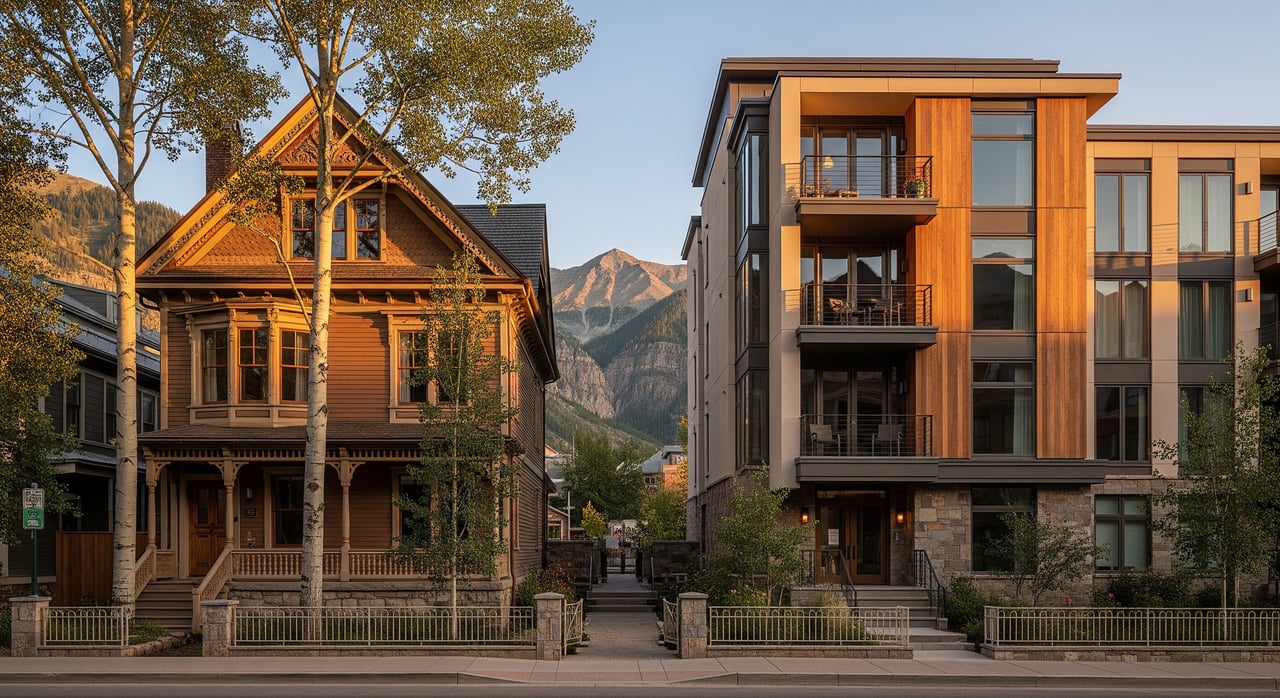
Torn between a lock-and-leave condo and a one-of-a-kind historic home in downtown Telluride? Both give you walkable access to shops, dining, and the lifts, but they live very differently. The right choice comes down to how you want to use your home, your appetite for maintenance, and the rules that come with each property type. This guide breaks down lifestyle, upkeep, inspections, regulations, and resale so you can decide with confidence. Let’s dive in.
Downtown Telluride at a glance
Telluride’s in-town core is compact and highly walkable, with a historic Main Street lined by shops and restaurants. Side streets feature preserved worker cottages and single-family homes alongside newer infill and a range of condos. Many properties sit within or adjacent to areas recognized for historic character, which can trigger design review for exterior changes.
Municipal services cover water, sewer, and snow removal on primary streets. Parking can be tight, and not every home has a garage or off-street space. The high-elevation climate means you should plan for snow loads, freeze-thaw wear, and sun exposure. Some parcels have elevated wildfire risk, especially near slopes or open land, which can affect insurance.
Condo living in town
What you get
Condos range from studio flats in older buildings to modern multi-bedroom residences. You get proximity to dining and lifts, shared building elements, and often storage or common spaces. Outdoor space is limited, but walkability is a major plus.
Maintenance and HOA
Condos are typically governed by an HOA that maintains the exterior, the roof, and shared systems. Monthly assessments support ongoing upkeep, reserves, and the building’s master insurance policy. Review the HOA budget, reserve study, meeting minutes, and any history of special assessments before you buy.
Privacy and noise
Units on or near Main Street can have more pedestrian and nightlife noise. Street-facing windows and balconies may reduce privacy compared with a detached home. If quiet is key for you, focus on location within the building and distance from the commercial core.
Financing and insurance
Lenders review the overall building as well as your unit, including owner-occupancy ratios and HOA financial health. You will typically carry an HO-6 policy for interior finishes and personal property, while the HOA covers the exterior and common areas under a master policy. Compare deductibles, liability limits, and whether wildfire or other endorsements are included.
Short-term rentals
Many Colorado mountain towns regulate short-term rentals. Telluride has had permitting and registration requirements that change over time. Always verify current town rules and any HOA restrictions, including minimum lease terms and caps, before relying on rental income.
Historic home ownership
Character and space
Historic cottages and Victorian-era homes offer distinctive architecture, porches, and yard space. You may gain privacy and a quieter residential feel, especially farther from the commercial corridor. Many homes also have potential for views, depending on siting.
Preservation and design review
Because much of downtown reflects a preserved historic fabric, exterior changes, additions, or demolition may require approvals. Some properties have recorded historic easements or covenants. Confirm whether your home is in a design-review area and obtain any relevant guidelines and recorded documents early in due diligence.
Inspections and maintenance
Older materials like wood siding, sash windows, and plaster can require specialized care. Expect non-standard floor plans and smaller kitchens in some homes. High-priority inspections include structural systems, roof and drainage, thermal performance, older wiring, potential lead or asbestos, and the age and capacity of boilers or radiant heat systems.
Insurance and wildfire
You will likely carry a homeowners policy that reflects the home’s age, roof type, and wildfire exposure. Insurers may ask for mitigation steps for properties near vegetation or on slopes. Understand coverage limits and any conditions that affect underwriting.
Parking and snow
Some historic homes lack garages or off-street parking. Snow removal on primary streets is municipal, but you are responsible for your drive, walkways, and roofs. Plan for snow-shed paths and proper drainage to protect foundations and siding.
Costs and operations
Condos centralize many costs through HOA dues. That can simplify budgeting, though fees vary based on building size, services, and reserves. Watch for master policy deductibles and the likelihood of future assessments.
Historic homes place most operating and upkeep costs on you. Utility usage can be higher if the home has original windows or limited insulation. Snow management, exterior painting, and specialty trades can add to annual expenses.
Value and resale factors
Condos often provide a lower entry price and broader buyer pool, especially for smaller or mid-tier units in active buildings. Resale strength depends on location, building health, and HOA governance. Buildings with strong reserves and clear maintenance plans tend to hold value better.
Historic homes are scarce and can command a premium for character and privacy. That said, the buyer pool may be narrower if systems are dated or if design-review constraints limit improvements. Appraisals for unique homes can take longer and benefit from appraisers familiar with Telluride’s historic market.
Expansion and projects
Downtown lots are small, with tight setbacks and height limits. Adding a garage, enlarging the footprint, or building an accessory unit may be constrained. Expect design-review considerations for most meaningful exterior work in historic areas. Verify zoning, parking rules, and allowable uses with the town for any property you are considering.
Which fits your lifestyle?
- Choose a condo if you want lock-and-leave convenience, minimal exterior maintenance, and immediate access to amenities. You accept shared walls, possible noise, and HOA oversight.
- Choose a historic home if you value privacy, yard space, and architectural character. You accept more maintenance, potential preservation review, and a personalized inspection process.
Due diligence checklist
For any property
- Confirm zoning, permitted uses, and any design-review requirements.
- Review title for recorded covenants, easements, or historic easements.
- Check San Miguel County tax records and assessed value trends.
- Verify local wildfire risk and current insurance availability and cost.
For condos
- Obtain HOA declaration, bylaws, budget, reserve study, and recent meeting minutes.
- Review the building’s master insurance policy and deductible.
- Ask about any past or pending special assessments or litigation.
- Confirm rental rules, lease minimums, and registration or permit status.
For historic homes
- Order a general home inspection, plus specialists for structure, roof and snow load, HVAC and plumbing, and historic materials.
- Evaluate envelope performance, original windows, and insulation.
- Test for lead paint or asbestos if renovation is planned.
- Verify permits and approvals for any prior renovations.
Smart next steps
- Clarify your priorities: walkability and simplicity versus privacy and character.
- If you lean condo, secure HOA documents and master policy details early. If you lean historic home, line up inspections with professionals experienced in older mountain properties.
- Call town planning to confirm zoning, setbacks, parking, and design-review triggers for any short list.
- Speak with an insurance broker who knows mountain and wildfire exposures, as well as condo master policies.
- Partner with a local broker who navigates both condo projects and historic properties to compare true operating costs, rental rules, and likely resale paths.
Ready to compare specific buildings and homes that match your criteria? Request a Private Consultation with Matthew Hintermeister to get tailored guidance, vetted due diligence steps, and a curated short list.
FAQs
What should I know about Telluride short-term rentals?
- Local rules change and may require permits or registration, and HOAs can have stricter bans or minimum lease terms. Confirm town regulations and HOA policies before relying on rental income.
How does historic design review affect renovations?
- Many in-town homes require approval for exterior changes, additions, or demolition. Obtain guidelines and check for recorded historic easements or covenants before planning work.
Are older Telluride homes harder to insure?
- Insurers consider age, roof type, and wildfire exposure, and may request mitigation. A local broker can outline coverage options and conditions for underwriting.
What should I look for in condo HOA documents?
- Review budget, reserves, meeting minutes, special assessments, litigation, rental rules, and the master insurance policy, including deductibles and coverage limits.
Can I add a garage or ADU to a historic home?
- Downtown lots often have tight setbacks and height limits, and design review can apply. Verify feasibility with the town’s planning staff for the specific parcel.
Will Main Street noise affect a condo’s resale?
- Street-adjacent units may have more noise and less privacy, which can narrow buyer appeal. Interior-facing or off-corridor units often enjoy broader demand.