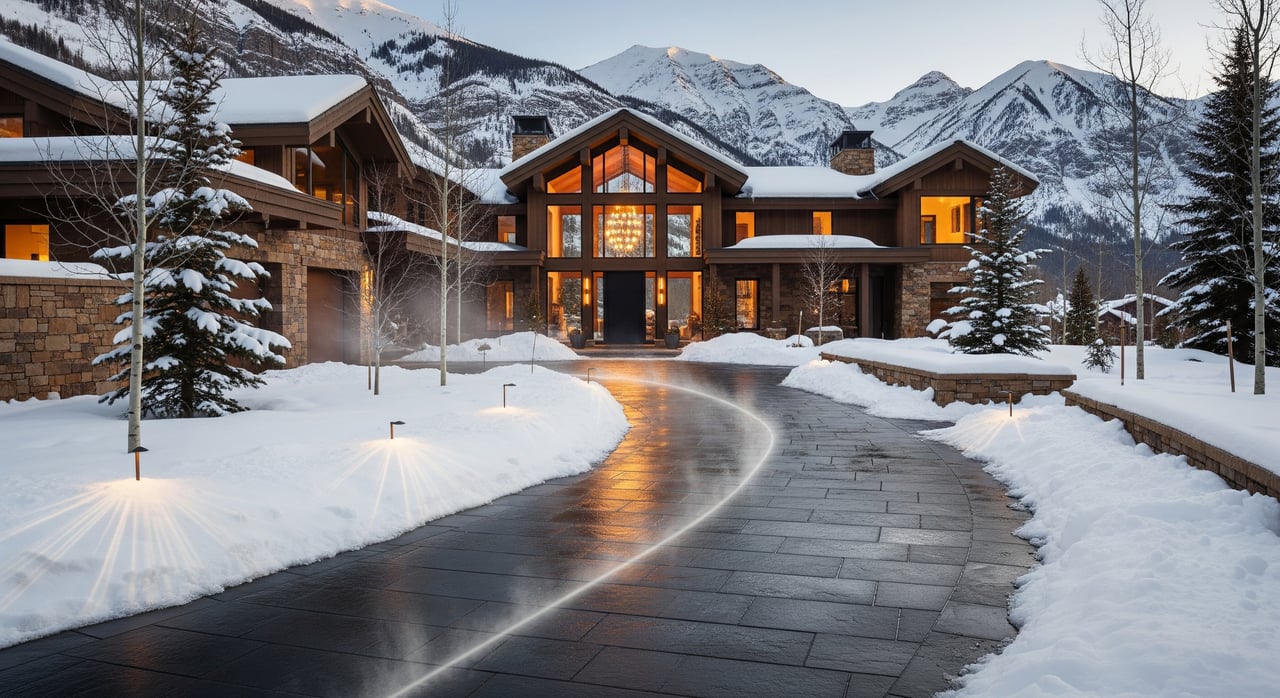
Picture the first big storm of the season. Instead of waking up to a sheet of ice on the drive, you see clear pavement and an easy path out. If you live in Telluride, Mountain Village, or Boulder, a heated driveway or walkway can make winter simpler and safer. Still, it pays to understand how these systems work, what they cost to run, and what to check before you buy a home with one. This guide breaks down system types, altitude and climate factors, installation and maintenance basics, and what to look for during inspection. Let’s dive in.
Heated driveway basics
Two system types
Hydronic (hot‑fluid) systems
- Use tubing in the driveway connected to a boiler or other heat source, a pump, and a manifold. At mountain elevations, a glycol mix is often used for freeze protection.
- Heated fluid circulates through the tubing, warming the slab to melt snow and ice.
- Often chosen for large driveways, long runs, or when a home already has a boiler that can serve multiple loads.
Electric systems
- Use electric heating cables or mats embedded under the surface with dedicated circuits and controls.
- Heat is produced directly by the cables and transferred to the driveway surface.
- Often chosen for smaller areas, steps, walks, or retrofit projects.
Pros and cons at a glance
Hydronic advantages
- More cost‑effective for large areas.
- Can tie into existing or high‑efficiency boilers and alternative heat sources.
- Flexible output control and long tubing life when installed correctly.
Hydronic tradeoffs
- Higher upfront complexity and installation cost.
- Requires a freeze protection strategy in mountain climates.
- Seasonal maintenance for mechanical components.
Electric advantages
- Simpler design and faster installation.
- Minimal mechanical equipment on site.
- Great for small or isolated sections.
Electric tradeoffs
- Higher operating costs for large areas.
- Requires enough electrical service capacity and dedicated circuits.
- Cables can be damaged by later slab cuts or repairs.
Smart controls and sensors
Modern systems use snow and temperature sensors, pavement probes, and timers to run only when needed. This reduces run time and energy use and can integrate with home automation or boiler controls for convenience.
Climate and altitude: Telluride vs. Boulder
Altitude and boiler performance
Telluride and Mountain Village sit around 8,700 to 9,600 feet. Thin air affects combustion appliances like boilers, so the equipment must be rated, adjusted, and vented for high altitude per manufacturer instructions and local code. Boulder sits near 5,400 feet, which still requires careful commissioning but may have different equipment considerations. Always verify that any fuel‑burning equipment is properly set up for the home’s elevation.
Snow, sun, wind, and freeze‑thaw
Snow type and weather exposure change how systems perform. Colder, drier snow at high elevations can melt differently than wet, heavy snow, and wind increases heat loss from the surface. In Boulder, more frequent freeze‑thaw cycles can lead to surface wear and refreezing of meltwater if drainage is not designed well. For both regions, sun exposure, shade, and wind can influence how quickly surfaces clear.
Sizing and insulation
System sizing depends on the area to keep clear, desired melt rate, surface material, insulation, ambient conditions, and typical snowfall intensity. Insulation under the slab and along edges is critical in mountain climates. Without it, heat is lost to the ground, response time slows, and energy use rises. Proper sizing and insulation improve both performance and efficiency.
Energy sources and service capacity
Operating cost and carbon considerations
Hydronic systems often run on natural gas or propane. Costs and carbon footprint depend on local fuel prices and emissions. Electric systems depend on the electricity mix and rates. High‑efficiency condensing boilers, heat pumps where practical, and options like solar thermal preheat or waste heat integration can help reduce operating costs and emissions when feasible.
Utility and service checks
Electric systems draw significant power, often in short bursts during storms. Confirm that the main electrical service and panel have capacity and that your local utility allows the load. In older or remote mountain homes, service upgrades may be needed. For hydronic systems, verify gas or propane supply capacity and safe venting for combustion appliances.
Installation and design details that matter
Surface choices and what they mean
- Concrete conducts heat well and is durable. Thicker slabs add thermal mass, which can slow initial response.
- Asphalt heats quickly but can be more complex to retrofit.
- Pavers require careful attention to bedding and aggregate; heating elements are typically placed in the base course or under the bedding layer.
Design details that drive performance
- Tubing or cable layout and spacing determine how evenly the surface melts. Closer spacing helps in extreme cold.
- Edge and sub‑slab insulation reduce heat loss and shorten run time.
- Joints and depth must be planned to avoid damage and allow for expansion.
- Manifolds and access should be placed where they can be serviced in winter.
Maintenance and typical lifespans
Hydronic systems
- PEX tubing can last for decades when installed correctly. Most issues come from accidental cuts or improper later work.
- Boilers, pumps, and valves often last 10 to 20 years or more with maintenance.
- Glycol requires periodic testing and replacement per manufacturer guidance.
- An annual pre‑winter inspection and commissioning is recommended.
Electric systems
- Heating cables can also last many years if not mechanically damaged.
- Controls and sensors may need periodic calibration or replacement.
- An annual visual and electrical check is a good practice.
Exact lifespans vary by brand, installation quality, and use. Review warranties and service records for the specific system.
Common failure modes
- Hydronic leaks in tubing, often due to installation damage or ground movement, can require slab removal to repair.
- Boiler or pump failure, manifold leaks, and valve issues can stop the system.
- Electrical problems such as tripped breakers, overloaded circuits, or cable damage can halt melting.
- Sensor faults or poor calibration can cause long run times or failure to activate.
- Insufficient insulation or poor layout can lead to uneven melting and wasted energy.
Drainage, safety, and environmental points
Melted snow must go somewhere. Plan for where runoff flows so it does not pool and refreeze at low points or affect neighboring areas. Follow local stormwater rules for discharge. If your hydronic system uses propylene glycol, keep the system tight and maintained to avoid leaks that could affect soil or stormwater.
Permits, inspections, and buyer checklists
Documents to request
- System type and installation date.
- Manufacturer specs for key components such as the boiler, pump, manifold, or cable type.
- Installer information and any transferable warranties.
- Permit records and final inspection sign‑offs from the local building department.
- Service records, including winter commissioning and glycol testing.
- Winter utility usage history to estimate operating costs.
- HOA rules related to heated surfaces or visible equipment.
Visual and technical inspection checklist
- Surface condition and any patches or repairs that could signal past issues.
- Boiler or manifold location, clear labels on circuits and valves, signs of leaks or corrosion, and proper venting clearances for combustion appliances.
- Electrical panel labeling, dedicated breakers, amperage, and required protection.
- Sensors and controls present and functional, including any remote connectivity.
- Evidence of glycol use and date of last test for hydronic systems.
- Permit stickers or entries in the local permit database.
- Saw cuts or slab changes that may have disrupted tubing or cables.
Red flags that warrant a closer look
- No permits or proof of professional installation.
- No maintenance or service records for boilers or glycol.
- Electrical service near capacity or unclear panel sizing.
- Repeated repairs or signs of recurring leaks below the surface.
- DIY modifications to mechanical or electrical components.
- HOA restrictions or unresolved runoff concerns.
Smart questions to ask sellers or listing agents
- How long has the system been installed, and who installed it?
- What are typical winter operating costs, and are utility bills available?
- Any known issues, repairs, or leak history?
- Do warranties transfer to a new owner?
- Has the system been shut off seasonally, and why?
- Were permits obtained and final inspections completed?
Resale value and daily living
Resort vs. city market expectations
In Telluride and Mountain Village, heated driveways can be a standout feature in luxury or vacation segments where year‑round access and convenience matter. Buyers who know mountain winters often value snowmelt systems as part of a high‑end amenity mix. In Boulder, where snow events and freeze‑thaw cycles differ, buyers may prioritize heated walkways or entries over full‑drive systems, balancing convenience with operating costs.
Everyday benefits and tradeoffs
You reduce shoveling and plow visits for treated areas, and you improve accessibility during storms. Operating costs vary with system type, energy prices, insulation, controls, and storm duration. If you still use a plow for unheated areas, mark heating system locations so equipment operators avoid damage. Plan for annual checkups before winter and, for hydronic systems, glycol testing on schedule.
Insurance and liability
Heated surfaces reduce slip‑and‑fall risk but do not eliminate it. Confirm coverage with your insurance provider. Clearly marking buried systems helps contractors avoid accidental damage and claims.
Cost‑benefit framing
If you have a large driveway in a heavy‑snow mountain setting, a hydronic system can make sense over time. For smaller sections or retrofits, an electric system is often more practical. Compare estimated operating costs, based on local rates, to the cost of contracted snow removal over an average winter. Your priorities, such as safety, convenience, and long‑term ownership plans, should guide the choice.
Choosing hydronic vs. electric for your property
Use this quick framework to narrow your options:
Area and usage
- Large driveways or long runs: lean hydronic.
- Small sections, steps, or walkways: lean electric.
Energy source and rates
- Existing efficient boiler or access to cost‑effective fuel: hydronic may win.
- Limited mechanical space or no boiler: electric may be simpler.
Electrical and gas capacity
- Confirm panel capacity and utility approvals for electric systems.
- Confirm safe venting and fuel supply capacity for hydronic systems.
New build vs. retrofit
- New construction offers the best path for hydronic or electric with ideal insulation.
- Retrofits often favor electric, though hydronic can work with repaving.
Performance priorities
- For extreme conditions and large areas, tighter spacing and robust insulation are key.
- Smart sensors and controls reduce run time and save energy.
Your next step
Whether you are weighing an install or evaluating a listing, focus on documentation, insulation, controls, and system capacity. Ask for permits and service records, confirm altitude‑appropriate equipment, and plan for annual maintenance. If you want a property in Telluride or Mountain Village that already has snowmelt or could support it, connect for tailored guidance and local insight. Reach out to Matthew Hintermeister for a private consultation.
FAQs
What is the difference between hydronic and electric snowmelt?
- Hydronic circulates heated fluid through tubing under the surface, while electric uses heating cables; hydronic suits large areas and electric suits smaller or retrofit projects.
How does altitude in Telluride affect boilers for snowmelt?
- Thin air at 8,700 to 9,600 feet requires boilers to be rated and commissioned for high altitude with proper venting per manufacturer and local code.
Do heated driveways work during high winds or heavy storms?
- Yes, but wind and storm intensity increase heat loss and run time; correct sizing, insulation, and controls help maintain performance.
What maintenance do these systems need each year?
- Schedule a pre‑winter inspection; hydronic systems may need glycol testing and boiler checks, and electric systems benefit from visual and electrical inspections.
What should I review before buying a home with a heated driveway?
- Request permits, installation and service records, warranties, utility history, and inspect panels, manifolds, sensors, and the slab for signs of past repairs.
Can runoff from snowmelt refreeze elsewhere on my property?
- Yes; plan drainage so meltwater does not pool at low spots where it can refreeze, and follow local stormwater guidelines.
Are rebates available for installing snowmelt systems?
- Possibly; availability depends on utility and local programs, so check current options with your local provider.